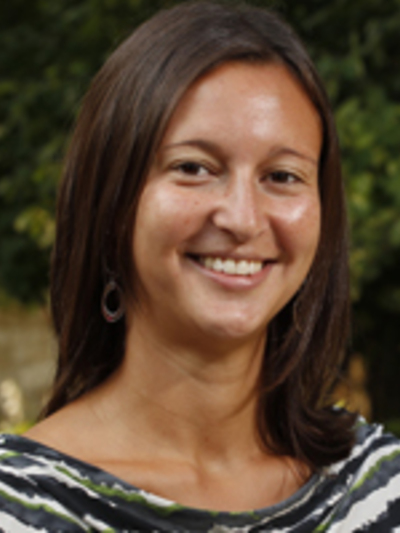
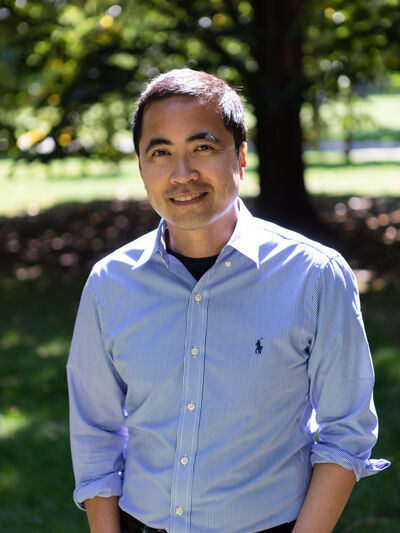
I'm glad to announce that this paper, published in collaboration with former COPS students Hyunjin Song (now at University of Vienna) and Myiah Hutchens (now at University of Florida) is now out in the journal in print: https://www.tandfonline.com/doi/full/10.1080/19312458.2019.1612865
This paper demonstrates that people are not as accurate in perceiving the political viewpoints of their political discussants as prior research has suggested. The political context appears to play some role; evenly divided contexts make guessing harder and so decrease accuracy. The paper also makes the case for paying attention not just to the accuracy vs. inaccuracy dichotomy, but to the threshold for trying to guess or accepting uncertainty -- that one just doesn’t know. And communication plays a role in both of these processes.
Monday, November 04, 2019
Saturday, October 19, 2019
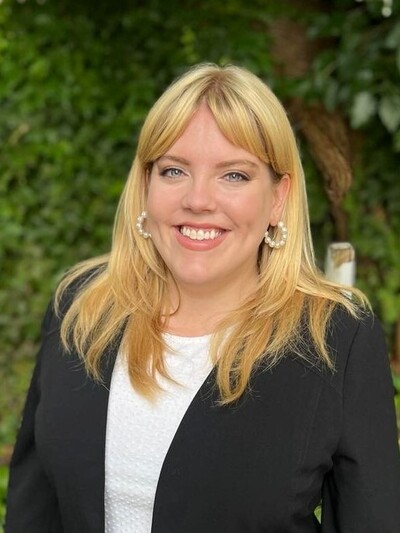
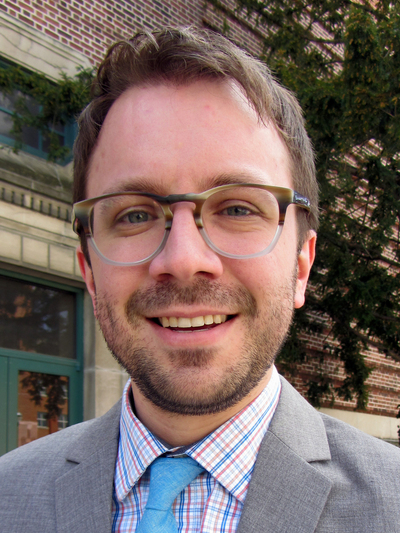
New Facebook study by Garrett and Poulsen in JCMC
![]() |
| Kelly Garrett |
![]() |
| Shannon Poulsen |
Tuesday, October 15, 2019
COPS Today: Context in Pol Comm Research
Today we will talk about an issue that is particularly salient at this moment in the United States: the role of context in the study of political communication effects. A new Forum was just released in the journal Political Communication which focuses on just this topic. For instance, Rojas and Valenzuela make the argument that research in the United States should have the same expectation of taking explicit consideration of the context of research conducted here as scholars studying other political contexts must make regarding any particular idiosyncrasies of those contexts. Let's talk about this, but perhaps expand the idea to the particular temporal context or geographic context of the research that we conduct in the U.S. For instance, what are the implications of gathering data at the current political moment, as the U.S. House of Representatives pursues an impeachment inquiry against the president, and roughly 20 Democrats vie for their party's nomination to run for president in 2020? And, would it matter if one were conducting a study a politics at this time in Iowa compared to Columbus Ohio compared to Montana?
Tuesday, October 08, 2019
Catching up: COPS Students take major School of Communication Research Awards
![]() |
| Matt Sweitzer |
![]() |
| Olivia Bullock |
Last spring at the School of Communication’s annual "Comm Day" celebration and awards banquet, two COPS members won awards for their outstanding research. Matthew Sweitzer won the Doris Gildea Morgan award for top senior researcher, and Olivia Bullock won the Walter B. Emery award for top junior researcher in the School. Belated congrats to them both!
Thursday, October 03, 2019
Garrett, Bond, and Poulsen on Satirical News
![]() |
| Robert Bond |
Wednesday, October 02, 2019
Congrats to Hillary Shulman!
![]() |
| Hillary Shulman |
Hillary and her colleague, Associate Professor Daniel Bergan (Michigan State University), won a $20,500 grant from the North Central Regional Center For Urban Development for their project titled "Local policymakers' perceptions of the opioid crisis and the efficacy of extension communications.”
As noted on the OSU School of Communication website, their project “aims to identify message strategies that affect how policymakers engage with the opioid crisis in their communities.”
Keep up the awesome work Hillary!
Tuesday, September 24, 2019
COPS meeting today on socialization to academic conferences
A quick reminder we’re meeting today to discuss academic
conferences. Senior COPS students Shannon Poulsen, Jacob Long and Matt Sweitzer
will lead the discussion, but come prepared for lots of question-asking and
wide-ranging discussions!
My apologies for missing again this week, but I hope to be
back next week…
Friday, September 13, 2019
Coronel, Poulsen and Sweitzer have forthcoming paper in Human Communication Research
![]() |
| Shannon Poulsen |
![]() |
| Jason Coronel |
![]() |
| Matt Sweitzer |
COPS faculty member Jason Coronel and COPS Ph.D. students Shannon Poulsen and Matt Sweitzer have a new paper forthcoming in Human Communication Research titled "Investigating the generation and spread of numerical misinformation: A combined eye movement monitoring and social transmission approach." Across two studies, they examined the role of schemas in the creation of numerical misinformation and how it can spread via person-to-person communication. They found that individuals misremember numerical information in a manner consistent with their schemas and person-to-person transmission can exacerbate these memory errors. These studies highlight the mechanisms supporting the generation and spread of numerical misinformation and demonstrate the utility of a multi-method approach in the study of misinformation. Congrats Jason, Shannon, and Matt!
Monday, September 09, 2019
Jacob Long on Two Award-Winning Conference Papers
COPS Ph.D. student Jacob Long had a very successful summer, with two papers winning awards at the Association for Education in Journalism and Mass Communication conference in Toronto. His sole-authored paper won the Chaffee-McLeod Top Student Paper award in
the Communication Theory and Methodology division.
Long, J. A. (2019, August). An approach for measuring partisan segregation in political media consumption. Paper presented at the 102nd Annual Conference of the Association for Education in Mass Communication and Journalism, Toronto, ON.
And, a paper he co-authored was a Top 2 student paper in the
Political Communication interest group (which has since been promoted to
division status):
Jeong, M. S., Long, J. A., & Lavis, S. M. (2019, August). From political satire to political discussion: Satire talk as mediator and affinity for political humor as moderator. Paper presented at the 102nd Annual Conference of the Association for Education in Mass Communication and Journalism, Toronto, ON.
These -- in conjunction with multiple 2018 and 2019 publications (Communication Research and Mass Communication & Society) and more on the way (in Journal of Communication) -- are a great way to start the academic job search year. Congrats Jacob!
Thursday, August 29, 2019
Conference Deadlines Approaching
Major conference deadlines are approaching as we head into fall. The Southern Political Science Association abstract deadline for the January 2020 meeting is Sept. 1st. The Midwest Political Science Association submission deadline is October 3rd for the April 2020 conference. The International Communication Association deadline for the May 2020 conference is November 1st. Finally, the American Association for Public Opinion Research submission deadline is November 8th for the May 2020 conference. In a few weeks we'll be having a "socialization" session in which we'll discuss these and other conferences you may wish to consider for your work, the value of conference participation, and some ideas for getting the most out of your participation. Senior COPS Ph.D. students Shannon Poulsen, Jacob Long, and Matt Sweitzer will serve as panelists on that COPS session.
Monday, August 26, 2019
New paper by Bullock, Amill, Shulman, & Dixon
![]() |
| Olivia Bullock |
Social Media and Misperceptions
![]() |
| Kelly Garrett |
Congrats to Kelly Garrett on his paper recently published on social media and political misperceptions! The bottom line conclusion is that "social media can alter citizens' willingness to endorse falsehoods during an election, but that the effects are often small." You can view the paper in Web format here or hit Kelly up directly for a PDF copy.
Garrett, R. Kelly (2019). Social media's contribution
to political misperceptions in U.S. Presidential elections. PLOS ONE, 14(3),
e0213500. doi:10.1371/journal.pone.0213500
Monday, April 29, 2019
Garrett & Bond receive award to analyze Facebook data
A research team that includes two School of Communication faculty is one of 12 inaugural
recipients of the Social Media and Democracy Research grants from the Social Science Research Council and their partner Social Science One. Garrett will lead the team, which also includes Rob Bond, Ceren Budak (University of Michigan), Jason Jones (Stony Brook University), and Drew Margolin (Cornell University).
The award provides unprecedented access to anonymous data from Facebook on the sharing of online content. These data will be used to examine a variety of behaviors that could be harm people's understanding of science, politics and their community, notably including sharing inaccurate information.
A brief description of the project is here: https://www.ssrc.org/fellowships/view/social-media-and-democracy-research-grants/grantees/garrett/
Other grantees are listed here: https://items.ssrc.org/social-media-and-democracy-research-grants-grantees/
And more details about the types of data to be analyzed are here: https://newsroom.fb.com/news/2019/04/election-research-grants/
The award provides unprecedented access to anonymous data from Facebook on the sharing of online content. These data will be used to examine a variety of behaviors that could be harm people's understanding of science, politics and their community, notably including sharing inaccurate information.
A brief description of the project is here: https://www.ssrc.org/fellowships/view/social-media-and-democracy-research-grants/grantees/garrett/
Other grantees are listed here: https://items.ssrc.org/social-media-and-democracy-research-grants-grantees/
And more details about the types of data to be analyzed are here: https://newsroom.fb.com/news/2019/04/election-research-grants/
Friday, January 11, 2019
Bond, Sweitzer publish paper on homophily in Reddit
Congratulations to Robert Bond and Matt Sweitzer for their recently released paper in Communication Research, "Political Homophily in a Large-Scale Online Communication Network." From the abstract:
As communication increasingly occurs in online environments, it is important to know the structure of such conversations in social networks. Here, we investigate patterns of conversation in online forums concerning politics, as well as patterns of cross-ideological interactions in forums that are not expressly political. First, we demonstrate a method for measuring the latent ideological preferences of more than 690,000 individuals using patterns of political commenting. Using this measure, we find that communication between ideologically dissimilar individuals becomes more common in periods of increased engagement with politics, that political homophily decreases as more individuals contribute to a conversation, and that forums dedicated to nonpolitical topics exhibit substantially less homophily than political forums. Theoretical implications for political communication on online platforms are discussed.
Tuesday, December 04, 2018
Election Modeling Talk through TDI
This talk may be of interest to some COPS members. https://tdai.osu.edu/events/2018/11/27/11021/
Title: “Forecasting U.S. elections using compartmental models of infection”

Authors: Alexandria Volkening (MBI, Ohio State University), Daniel F. Linder (Augusta University), Mason A. Porter (University of California, Los Angeles), and Grzegorz A. Rempala (Ohio State University)
Abstract: U.S. election prediction involves polling likely voters, making assumptions about voter turnout, and accounting for various features such as state demographics and voting history. While political elections in the United States are decided at the state level, errors in forecasting are correlated between states. With the goal of shedding light on the forecasting process and exploring how states influence each other, we develop a framework for forecasting elections in the U.S. from the perspective of dynamical systems. Through a simple approach that borrows ideas from epidemiology, we show how to combine a compartmental model with public polling data from HuffPost and RealClearPolitics to forecast gubernatorial, senatorial, and presidential elections at the state level. Our results for the 2012 and 2016 U.S. races are largely in agreement with those of popular pollsters, and we use our new model to explore how subjective choices about uncertainty impact results. We conclude by comparing our forecasts for the senatorial and gubernatorial races in the U.S. midterm elections of November 6, 2018, with those of popular pollsters.
Subscribe to:
Posts (Atom)